Limb Salvage / Complex Extremity Reconstruction

Before Amputation Is Accepted as the Only Option, We Look for a Way to Save the Limb

In 2018, Dr. Mehan led the surgical team that saved NFL quarterback Alex Smith's leg after an injury comparable to Joe Theismann's career ending injury 33 years earlier. That case grew out of a program Dr. Mehan founded after performing the first microsurgical limb salvage surgery at Inova Fairfax Hospital, the region's largest Level I trauma center. It remains the region's only full spectrum limb salvage program.

Schedule a Limb Salvage Evaluation

What Limb Salvage Surgery Is

Limb salvage surgery removes what is threatening a limb, tumor, damaged tissue, or the effects of trauma, while keeping the limb itself. Twenty years ago, many of these same injuries and diagnoses ended in amputation. That has changed. Bone can be reconstructed with donor bone or metal implants, tissue can be regenerated, and healthy tissue can be transferred from elsewhere in the body using microsurgical technique. The goal is always the same: remove the threat, save the limb, and restore enough function that you can use it again.

What Leads to Limb Salvage Surgery

Traumatic Injury

Severe fractures, crush injuries, and sports injuries, like Alex Smith's, where the limb is intact but badly damaged.

Malignant Tumors

Cancer in the bone or soft tissue of an arm or leg, removed along with a margin of surrounding tissue, then reconstructed.

Vascular Disease

Poor blood flow that puts tissue at risk, where restoring circulation and reconstruction can prevent amputation.

Diabetic Complications

Wounds and infections that will not heal properly, which can threaten a limb without the right wound care and reconstruction.

Why Patients Travel Here for This

The region's only full spectrum limb salvage program.

  • Dr. Mehan performed the first microsurgical limb salvage surgery at Inova Fairfax Hospital and founded the region's only full spectrum limb salvage program.
  • Dr. Mehan led the team that saved Alex Smith's leg in a case that made national news, working alongside Dr. Johnson and the surgical team.
  • Every reconstruction option, bone, metal, or tissue based, is available in house, so your treatment plan is not limited by one surgeon's training.

How Your Limb Is Reconstructed

We use three approaches, often in combination, depending on what was removed and where.

Bone Reconstruction

Donor bone rebuilds what was removed. Your remaining bone gradually heals into and grows through it over time.

Metal Implants

Implantable prostheses replace a joint surface and the adjacent bone, built to hold up to years of normal use.

Tissue Based Reconstruction

Your own cells and microsurgical technique regenerate tissue and reconnect nerves and blood vessels.

What to Expect

Before Surgery

Trauma cases become emergency procedures. For planned cases, blood thinners and supplements stop about a week beforehand.

In the Hospital

Most patients stay 5 to 10 days while the team monitors blood flow, sensation, and watches for complications.

Recovery

Wound healing takes about two weeks. Therapy begins the next day and can continue for up to a year.

Risks, in Plain Terms

Every major reconstructive surgery carries risk: infection, implant shifting, reduced blood flow or sensation, and significant blood loss are the main concerns. Prior radiation can slow healing, and in some cases amputation is still ultimately necessary. Dr. Mehan and Dr. Johnson will walk you through your specific risk profile before any decision is made.

Frequently Asked Questions

Often, yes. Advances over the last two decades mean a diagnosis that once meant automatic amputation now frequently has a reconstructive path. The only way to know for certain is a direct evaluation.

No. Trauma, vascular disease, and diabetic complications are common reasons patients need limb salvage, in addition to tumors. Alex Smith's case, for example, was a traumatic sports injury, not a tumor.

Initial wound healing takes about two weeks, but full rehabilitation can take up to a year depending on how much bone and tissue needed to be reconstructed.

Dr. Mehan founded the region's only full spectrum limb salvage program after performing the first microsurgical limb salvage surgery at Inova Fairfax Hospital, and every reconstruction method is available in house.

If another surgeon has recommended amputation, get a second opinion first.

We evaluate every case individually. Bring your imaging and prior recommendations to your consultation.

Schedule a Limb Salvage Evaluation

LIMB SALVAGE

Can My Limb Be Saved?

When severe injury, infection or tissue loss threatens an arm or leg, advanced reconstructive surgery may offer another option.

Limb salvage surgery in Northern Virginia, serving patients throughout Virginia, Maryland and Washington, DC.

Limb salvage reconstructive surgery

WHEN A LIMB IS AT RISK

When Is Limb Salvage Considered?

Limb salvage may be considered when injury, infection, disease or tissue loss places an arm or leg at risk.

01

Severe Trauma

Complex injuries involving bone, soft tissue or other critical structures.

02

Non-Healing Wounds

Wounds that remain open or fail to heal despite previous treatment.

03

Infection

Serious infections affecting tissue, bone or a previous surgical site.

04

Exposed Bone or Hardware

When healthy tissue is needed to cover and protect critical structures.

05

Tumors & Tissue Loss

Reconstruction after diseased bone or tissue has been removed.

06

Complex Previous Surgery

Healing complications or tissue damage following previous procedures.

UNDERSTANDING LIMB SALVAGE

Saving a Limb Is About More Than Keeping It

Limb salvage is an approach to treating a severely damaged or diseased arm or leg when preserving the limb may still be possible. Reconstruction considers healing, stability and useful function.

01

Control the Problem

Address damaged, infected or unhealthy tissue.

02

Reconstruct

Restore missing or damaged tissue where possible.

03

Preserve Function

Work toward a stable, healed and functional limb.

Not every threatened limb can or should be salvaged. Treatment recommendations depend on the individual injury, overall health and expected function.

ADVANCED RECONSTRUCTION

When Closing the Wound Isn't Enough

Severe limb injuries can affect more than skin. Bone, muscle, tendons, nerves, blood vessels and other structures may also be damaged.

Wound Coverage

Healthy tissue can be used to protect exposed bone, tendons or surgical hardware.

Free Flap Reconstruction

When nearby tissue isn't sufficient, healthy tissue may be transferred from another area of the body.

Microsurgery

Microsurgical techniques allow surgeons to reconnect very small blood vessels and establish circulation to transferred tissue.

Functional Reconstruction

Treatment considers wound closure alongside stability, movement and useful function.

Alex Smith following complex limb salvage reconstruction

A NATIONALLY RECOGNIZED LIMB SALVAGE CASE

When Everything Was on the Line

After a devastating leg injury and life-threatening complications, NFL quarterback Alex Smith underwent an extraordinary multidisciplinary effort to save his leg. Dr. Vineet Mehan served as the lead reconstructive surgeon on the team involved in his limb salvage reconstruction.

Learn More About Complex Reconstruction

EVERY CASE IS DIFFERENT

Could Limb Salvage Be an Option for Me?

Whether a limb can be salvaged depends on the nature and extent of the injury or disease and what would be required to achieve a safe, functional reconstruction.

YOUR EVALUATION MAY CONSIDER

Blood supply
Bone & soft-tissue damage
Nerve involvement
Infection
Previous operations
Available healthy tissue
Overall health & healing
Expected function

COMMON QUESTIONS

Limb Salvage FAQs

Can every threatened limb be saved?
No. Limb salvage is not possible or appropriate in every case. The extent of injury or disease, blood supply, infection, tissue damage, overall health and expected function can all influence the treatment recommendation.
Does limb salvage always require microsurgery?
No. The reconstructive approach depends on the problem. Some cases may require wound care, grafting or local tissue reconstruction, while more complex injuries may require free-flap reconstruction and microsurgery.
What is free-flap reconstruction?
Free-flap reconstruction transfers healthy tissue from another area of the body to an area where local tissue isn't sufficient. Microsurgical techniques are used to reconnect the small blood vessels that supply the transferred tissue.
When should I seek a limb salvage evaluation?
If a serious injury, wound, infection or other condition has placed an arm or leg at risk, or amputation is being considered, a reconstructive evaluation can help determine what treatment options may be available.

EXPLORE YOUR OPTIONS

Before Losing a Limb, Understand What May Be Possible.

Every situation is different. A reconstructive evaluation can help determine whether limb salvage may be appropriate and what treatment could involve.

LIMB SALVAGE

Can My Limb Be Saved?

Before amputation is accepted as the only option, a reconstructive evaluation can help determine whether limb salvage may be possible.

Advanced limb salvage and complex extremity reconstruction in Northern Virginia, serving Virginia, Maryland and Washington, DC.
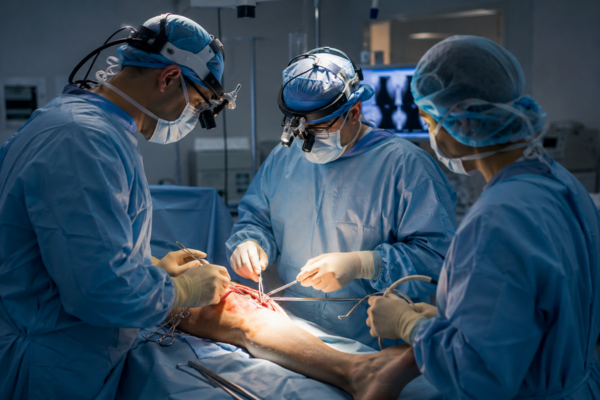
Limb salvage reconstructive surgery

WHEN A LIMB IS AT RISK

When Is Limb Salvage Considered?

Limb salvage may be considered when trauma, infection, disease or tissue loss places an arm or leg at risk.

01

Severe Trauma

Complex fractures, crush injuries and major damage involving bone and soft tissue.

02

Non-Healing Wounds

Wounds that remain open or fail to heal despite previous treatment.

03

Serious Infection

Infection involving soft tissue, bone or a previous surgical site.

04

Exposed Bone or Hardware

Situations where durable healthy tissue is needed to protect deeper structures.

05

Tumors & Tissue Loss

Reconstruction following removal of diseased bone or soft tissue.

06

Complex Surgical Complications

Tissue damage or healing complications following previous surgery.

WHY PATIENTS TRAVEL HERE

The Region's Only Full-Spectrum Limb Salvage Program

Dominion Plastic Surgery brings advanced microsurgery, complex extremity reconstruction and multiple reconstructive approaches together for patients facing limb-threatening conditions.

01

First Microsurgical Limb Salvage at Inova Fairfax

Dr. Vineet Mehan performed the first microsurgical limb salvage surgery at Inova Fairfax Hospital and went on to establish the region's only full-spectrum limb salvage program.

02

Nationally Recognized Complex Reconstruction

Dr. Mehan served as lead reconstructive surgeon on the multidisciplinary team involved in saving NFL quarterback Alex Smith's leg after a devastating injury and life-threatening complications.

03

Full Range of Reconstructive Options

Treatment planning is not limited to a single reconstructive technique. Bone-, implant- and tissue-based approaches can be considered based on the patient's specific injury and needs.

Alex Smith following complex limb salvage reconstruction

THE CASE THAT MADE NATIONAL NEWS

Alex Smith's Leg

After suffering a devastating tibia and fibula fracture, Alex Smith developed a severe infection and necrotizing fasciitis. Amputation became a real possibility.

Dr. Vineet Mehan served as lead reconstructive surgeon on the multidisciplinary team involved in Smith's limb salvage. After extensive treatment and reconstruction, Smith ultimately returned to professional football.

Read the Alex Smith Story

UNDERSTANDING LIMB SALVAGE

Saving a Limb Is About More Than Keeping It

Limb salvage focuses on preserving the limb when medically appropriate while addressing the underlying problem and working toward healing, stability and useful function.

01

Control the Threat

Address damaged, infected, diseased or unhealthy tissue.

02

Reconstruct

Rebuild missing or damaged structures using the reconstructive approach appropriate for the case.

03

Restore Function

Work toward a stable, healed and functional extremity.

Limb salvage is not possible or appropriate in every situation. Treatment depends on the injury or disease, overall health, expected function and the safest long-term option.

ADVANCED RECONSTRUCTION

When Closing the Wound Isn't Enough

Complex limb salvage may require reconstruction of skin, muscle, bone, nerves, blood vessels or other structures depending on the injury.

Wound Coverage

Healthy tissue can help protect exposed bone, tendons or surgical hardware.

Free Flap Reconstruction

Healthy tissue can be transferred from another part of the body when nearby tissue is not sufficient.

Microsurgery

Small blood vessels can be reconnected to establish circulation to transferred tissue.

Bone & Structural Reconstruction

Bone- or implant-based reconstruction may be used when deeper structural support also needs to be restored.

EVERY CASE IS DIFFERENT

Could Limb Salvage Be an Option for Me?

Whether a limb can be salvaged depends on the extent of injury or disease and what would be required to achieve a safe, durable and functional reconstruction.

YOUR EVALUATION MAY CONSIDER

Blood supply
Bone & soft-tissue damage
Nerve involvement
Infection
Previous operations
Available healthy tissue
Overall health & healing
Expected function

COMMON QUESTIONS

Limb Salvage FAQs

Can every threatened limb be saved?
No. Limb salvage is not possible or appropriate in every case. The extent of injury or disease, blood supply, infection, tissue damage, overall health and expected function can all influence the treatment recommendation.
Is limb salvage only for cancer patients?
No. Limb salvage can be considered for severe trauma, complex wounds, infection, tissue loss and other limb-threatening conditions in addition to tumors.
Does limb salvage always require microsurgery?
No. Treatment depends on what structures need to be reconstructed. Some cases may use local tissue, grafting or structural reconstruction, while more complex cases may require free tissue transfer and microsurgery.
What is free-flap reconstruction?
Free-flap reconstruction transfers healthy tissue from another area of the body to an area where local tissue is not sufficient. Microsurgical techniques are used to reconnect the blood vessels that supply the transferred tissue.
When should I seek a limb salvage evaluation?
If a serious injury, wound, infection or other condition has placed an arm or leg at risk, or amputation has been discussed, a reconstructive evaluation can help determine what treatment options may be available.

EXPLORE YOUR OPTIONS

If Amputation Has Been Discussed, Understand Whether Other Options May Exist.

Every case is different. A limb salvage evaluation can help determine whether reconstruction may be appropriate and what treatment could involve.